

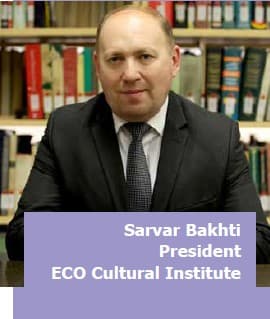
Cultural traditions of each country are the manifestation
of the collective pride of the inhabitants of that
specific territory and include all forms of creative
expression. These cultural traditions are the most
powerful medium that can overcome boundaries and
limitations, and can change the individual, a mindset,
or the way a society perceives itself and its surroundings.
Experiencing the arts and cultural traditions of different
nations, trying their cuisine and strolling through
their history are undoubtedly the best means of discovering
a country. And that is precisely what cultural
tourism is all about.
According to UN World Tourism Organization’s definition
of cultural tourism adopted during the 22nd
Session of the General Assembly held in Chengdu,
China (11–16 September 2017), cultural tourism is a
type of tourism activity in which the visitor’s essential
motivation is to learn, discover, experience and consume
the tangible and intangible cultural attractions/
products in a tourism destination. These attractions/
products relate to a set of distinctive material, intellectual,
spiritual and emotional features of a society
that encompass arts and architecture, historical and
cultural heritage, culinary heritage, literature, music,
creative industries and the living cultures with their
lifestyles, value systems, beliefs and traditions.
As the world’s mosaic of art forms, heritage sites,
festivals, traditions, and pilgrimages, cultural tourism
can strengthen the attractiveness and competitiveness
of regions and countries and the ECO region
boast of some of the most excellent opportunities of
such type of tourism.
This unique advantage of our region could be well
utilized to create a positive tourism dynamic between
the ECO countries to work for the sustainability and
the benefit of the local communities, promote tourism
development that encourages cultural interaction
and ensure that the benefits are shared by all the
member states.
Yet, each country has a symbol of cultural tourism
and for Iran, as the host country of ECO Cultural Institute,
Isfahan serves as this symbol due to many
reasons: it is one of the most spectacular cities of not
just the ECO region but the world; the city is globally
known for its antiquity, magnificent historical monuments
and stunning handicrafts; it has international
titles such as World Craft City and UNESCO Creative
City of handicrafts and folk arts and finally, Isfahan
has singed Sister City agreements with 13 world cities
including Lahore in Pakistan.
That is why ECI decided to dedicate a special issue
of ECO Heritage cultural quarterly to the elements of
cultural tourism in the historic city of Isfahan. This
issue, prepared in cooperation with Isfahan Municipality,
is the first in a series of publications planned to
cover the symbols of cultural tourism in other countries
of the ECO region.
I am confident that the desire to visit many cities of
the ECO region, which are symbols of cultural tourism,
exists in the hearts of all of us in the region. We
earnestly hope that the wish would come true in the
nearest future and everybody finds the opportunity
to relish the beauties of these historic cities.